Save 10% with a monthly subscription and get free delivery from two cases. Pause or cancel any time.
Home › Health Guide › Daily Protein Intake
Nutrition Basics
How to calculate your daily protein intake? Enter your weight to work out how much you need a day | With an interactive table of 20 Hong Kong foods
How much protein is in an egg? How much should a 60 kg office worker eat a day? Enter your weight, then add what you have eaten today, and see at a glance whether you have had enough.

"Protein" has become a hot health topic in Hong Kong in recent years: some people count it at every meal, some feel only gym-goers need it, and some older people worry that eating too much meat harms the kidneys. In fact, muscles, skin, hair and enzymes all rely on protein to be maintained and repaired — whether or not you exercise, your body needs it every day.
How much should you eat a day? It takes only one formula: body weight (kg) × the recommended amount per kg. This article shows you how to work out your own target by age and activity level, then use an interactive food table to add breakfast, lunch and dinner and see instantly how much is still missing.
30-second summary
- A healthy adult needs about 0.83 g of protein per kilogram of body weight per day: about 50 g for 60 kg, about 58 g for 70 kg.
- For those over 65, 1.0 to 1.2 g is advised; for people who exercise regularly, about 1.4 to 2.0 g.
- Spreading it evenly across three meals, about 20 to 30 g each, is better than eating a large amount all at dinner.
- One egg has about 6 g of protein; 20 g of protein is roughly equal to 3.5 eggs, or 1 bottle of HEYAMI Green Mandarin Pu'er Protein Tea.
- The times Hong Kong people most often "miss" are breakfast and afternoon tea; filling these two gaps makes it easiest to hit the target.
How much protein should you eat a day? One formula to work it out
Short answer: A healthy adult's daily protein need = body weight (kg) × 0.83 g. For example, someone of 60 kg needs about 50 g of protein a day.
According to the joint report of the World Health Organization, the Food and Agriculture Organization and the United Nations University, 0.83 g of protein per kilogram of body weight per day is estimated to meet the needs of about 97.5% of healthy adults — a widely used global reference value.
| Body weight | General adult × 0.83 | Over 65 × 1.0–1.2 | Regular exercise × 1.4–2.0 |
|---|---|---|---|
| 50 kg | About 42 g | 50–60 g | 70–100 g |
| 60 kg | About 50 g | 60–72 g | 84–120 g |
| 70 kg | About 58 g | 70–84 g | 98–140 g |
| 80 kg | About 66 g | 80–96 g | 112–160 g |
Pregnant and breastfeeding women, children and people with long-term illness have different needs and should consult a doctor or registered dietitian.
Interactive calculator: have you had enough protein today?
Short answer: Enter your weight, choose your lifestyle, then press "+" to add the foods you have eaten today; the progress bar shows instantly what percentage of your target you have reached.
Try a sample day:
| Food (portion) | Protein | Content comparison | Portions today |
|---|---|---|---|
| Chicken breast (skinless, cooked) 100 g | 31 g | ||
| Lean beef (cooked) 100 g · varies by cut | 28 g | ||
| Chicken thigh (skinless, cooked) 100 g | 26 g | ||
| Lean pork (cooked) 100 g | 26 g | ||
| Canned tuna (in water) 100 g · choose the water-packed type | 24 g | ||
| Prawns (cooked) 100 g | 24 g | ||
| Salmon 100 g · also a source of omega-3 | 20 g | ||
| HEYAMI Green Mandarin Pu'er Protein Tea 1 bottle 500 ml · 95 kcal, 0 sugar, sweetener-free | 20 g | ||
| Greek yoghurt (plain) 150 g · choose no added sugar | 15 g | ||
| Edamame (shelled) 100 g | 12 g | ||
| Firm tofu 100 g · varies 8–15 g by firmness | 12 g | ||
| Pasta (cooked) 200 g | 11 g | ||
| Milk 250 ml | 8 g | ||
| Unsweetened soy milk 250 ml · varies widely by brand | 7 g | ||
| Peanut butter 2 tablespoons · high in calories | 7 g | ||
| Egg 1 egg | 6 g | ||
| Almonds A small handful, 28 g | 6 g | ||
| White rice 1 bowl, 200 g | 5 g | ||
| Oats (dry) 40 g | 5 g | ||
| Cheese 1 slice | 4 g |
The food figures are approximate, referencing the U.S. Department of Agriculture FoodData Central and product nutrition labels; actual content varies by brand, cut and cooking method. The calculator is for general reference only and is not suitable for people who need to control their protein intake.
After trying the "busy office worker" sample, you will find: an egg at breakfast, a plate of rice at lunch and a portion of meat at dinner add up to only about 42 g — not even the basic need of a 60 kg adult. The problem is usually not dinner, but that breakfast and afternoon tea have almost no protein.
For the three-in-the-afternoon gap, one bottle replenishes 20 g: See HEYAMI Green Mandarin Pu'er Protein Tea
How much do older people, sports people and those cutting fat need?
Short answer: For those over 65, 1.0 to 1.2 g per kg is advised; for people who exercise regularly, about 1.4 to 2.0 g; during fat loss, keeping total calories controlled while raising the protein proportion moderately helps preserve muscle and increase fullness.
Older people: preventing muscle loss
After middle age, muscle mass declines year by year, which in serious cases can develop into "sarcopenia", raising the risk of falls and reduced mobility. The international expert group PROT-AGE advises healthy people over 65 to take 1.0 to 1.2 g of protein per kilogram of body weight per day; older people with severe kidney disease who are not on dialysis are an exception and must be assessed by a doctor (source).
Many older people eat less, have weaker teeth, cannot chew meat, and find nutritional milks too sweet. Steamed egg, tofu and fish are all good choices; if they want a bottle, familiar tea flavours such as Pu'er and tangerine peel are usually easier to accept than a shake.
People who exercise regularly: repairing and building muscle
The International Society of Sports Nutrition (ISSN) notes that a daily intake of 1.4 to 2.0 g of protein per kilogram for most people who exercise regularly is sufficient to support muscle repair and growth, and advises about 20 to 40 g per meal (source). Eating a protein-containing meal within one to two hours after exercise is preferable, but the daily total and even distribution matter more.
During fat loss: protect muscle, reduce cravings
When you cut calories, the body may lose muscle as well as burning fat. On the premise that total calories are controlled, moderately raising the protein proportion helps preserve muscle, and protein is also more satisfying. The practical way is simple: swap your daily sweet drink or portion of snacks for a high-protein, low-calorie option. The specific amounts should be set by a registered dietitian according to individual circumstances.
Do you need protein supplementation if you do not exercise?
Yes, but usually no large "extra" supplement is needed. Protein takes part every day in the renewal of muscle, skin, enzymes, hormones and other body tissues; even without going to the gym, the body keeps carrying out protein turnover. As long as meals include meat, fish, eggs, soy products or dairy, most people already meet the target. The point is even distribution, not chasing a very high number.
What does 20 g of protein look like in food?
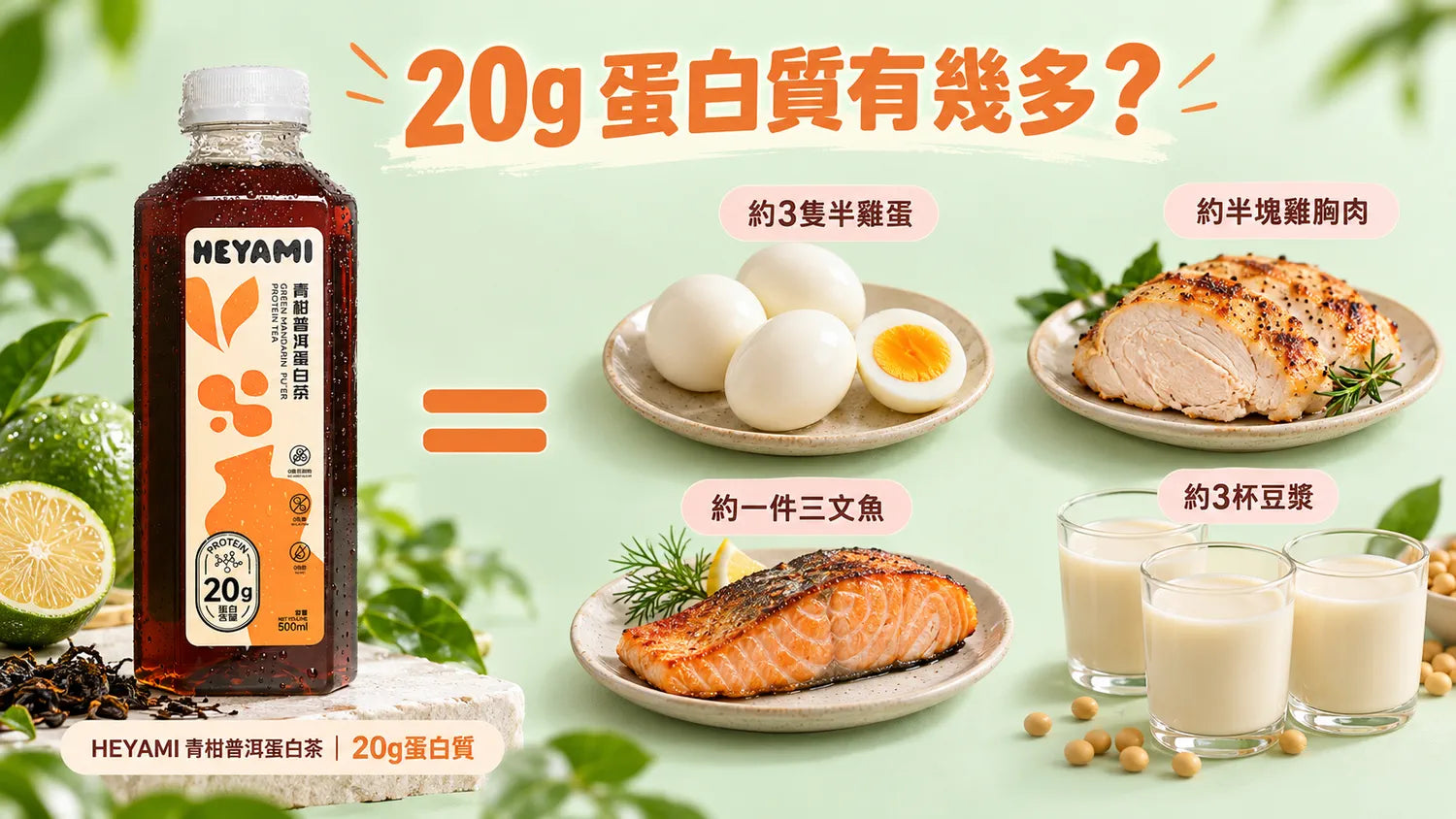
Short answer: 20 g of protein is roughly equal to 3.5 eggs, 65 g of cooked chicken breast, 100 g of salmon, about 700 ml of unsweetened soy milk, or 1 bottle of HEYAMI Green Mandarin Pu'er Protein Tea.
🥚 × 3.53.5 eggs
About 21 g
About 21 g
🍗 65 gCooked chicken breast
About half a palm
About half a palm
🐟 100 gSalmon
One medium fillet
One medium fillet
🥛 About 700 mlUnsweetened soy milk
Close to 3 cups
Close to 3 cups
🥛 About 600 mlMilk
About 2.5 cups
About 2.5 cups
🍵 1 bottleHEYAMI protein tea
500 ml · 95 kcal · 0 sugar
500 ml · 95 kcal · 0 sugar
For office workers, the hardest part is often not too little food but not enough time. Rushing to work with only a pineapple bun in the morning, a plate of rice for lunch, and snacking to get through the afternoon, protein easily ends up all concentrated at dinner. At times like this, a bottle of ready-to-drink protein tea fills the gap in between.
How much protein is in McNuggets, Sushiro, a boiled egg or tofu pudding?
Short answer: 6 Chicken McNuggets have about 18.3 g of protein; 1 large boiled egg about 6 g; 1 bowl of tofu pudding about 5 g. Sushiro Hong Kong currently lists only calories and does not publish protein figures, so it can only be estimated by fish type and portion.
| Common Hong Kong food | Reference portion | Protein | How to read it |
|---|---|---|---|
| Chicken McNuggets | 6 pieces | About 18.3 g | Close to the 20 g of 1 bottle of HEYAMI; the figure comes from McDonald's Hong Kong nutrition data. |
| Boiled egg | 1 large | About 6 g | It takes about 3 to 4 to approach 20 g. |
| Tofu pudding | 1 bowl | About 5 g | A plant protein, but the syrup and toppings change the calories. |
| Sushiro nigiri sushi | 1 plate, 2 pieces | No official figure | Ordinary fish varieties can be roughly estimated at about 4 to 8 g; actual depends on fish species, slice thickness and style. |
Sources: McDonald's Hong Kong Chicken McNuggets (6 pcs) nutrition data, USDA egg nutrition data and the Hong Kong Dietitians Association. No official protein figure was used for Sushiro, only a general estimated range; restaurant recipes and portions may change, so please refer to the latest official data when ordering.
The moments when 4 kinds of people most easily fall short of protein
Short answer: An office worker's breakfast and afternoon tea, a university student's "bun as a meal", not having time to eat after exercise, and an older person's shrinking appetite are the most common protein gaps.
💼 Office worker
A coffee and toast for breakfast, cake and milk tea to get through three in the afternoon, and the whole day's protein concentrated at dinner.
Add an egg at breakfast and swap afternoon tea for a bottle of HEYAMI: 20 g more protein, 0 sugar, 95 kcal.
🎓 University students and young people starting out
Classes, part-time work and projects make meals irregular; a bun often stands in for a meal; you want to cut fat yet fear hunger.
Keep a bottle in your backpack, so you still get 20 g of protein when rushing; use it instead of bubble tea — healthy and money-saving.
🏋️ Sports people
Aiming for over a hundred grams of protein a day, but sick of chicken breast, and powder needs mixing and the shaker washing.
Open a bottle straight after training, no mixing needed; a refreshing tea taste, not heavy like a shake after drinking.
👵 Older people
Eating less, meat hard to chew, nutritional milks too sweet and milky — give up after two days.
Pu'er and tangerine peel are familiar flavours, refreshing and not sweet. Those with kidney disease or chronic illness should ask a doctor first.
How to divide protein across three meals? A Hong Kong meal plan example
Short answer: Divide the whole day's protein evenly across three meals plus afternoon tea, about 20 to 30 g each time — better than almost none at breakfast and a large amount all at dinner.
The most common problem nowadays is not the complete absence of protein, but bread only at breakfast, a rushed lunch, and a large amount all at dinner. Dividing protein more evenly across breakfast, lunch, afternoon tea and dinner is usually easier to keep up long term than making it up just before bed.
The following is an example for a 60 kg office worker who does weight training a few times a week, targeting about 84 to 120 g a day:
| Time | Sample meal plan | Protein | Cumulative progress |
|---|---|---|---|
| Breakfast | 2 boiled eggs + 1 cup unsweetened soy milk + wholemeal toast | About 23 g | 23 g |
| Lunch | Skinless chicken thigh rice (about 100 g chicken) + vegetables | About 31 g | 54 g |
| Afternoon tea | 1 bottle of HEYAMI Green Mandarin Pu'er Protein Tea | 20 g | 74 g |
| Dinner | Steamed salmon + tofu + vegetables + a little rice | About 32 g | About 106 g |
The sample is for reference only; actual portions should be adjusted to your individual calorie needs, health status and eating habits.
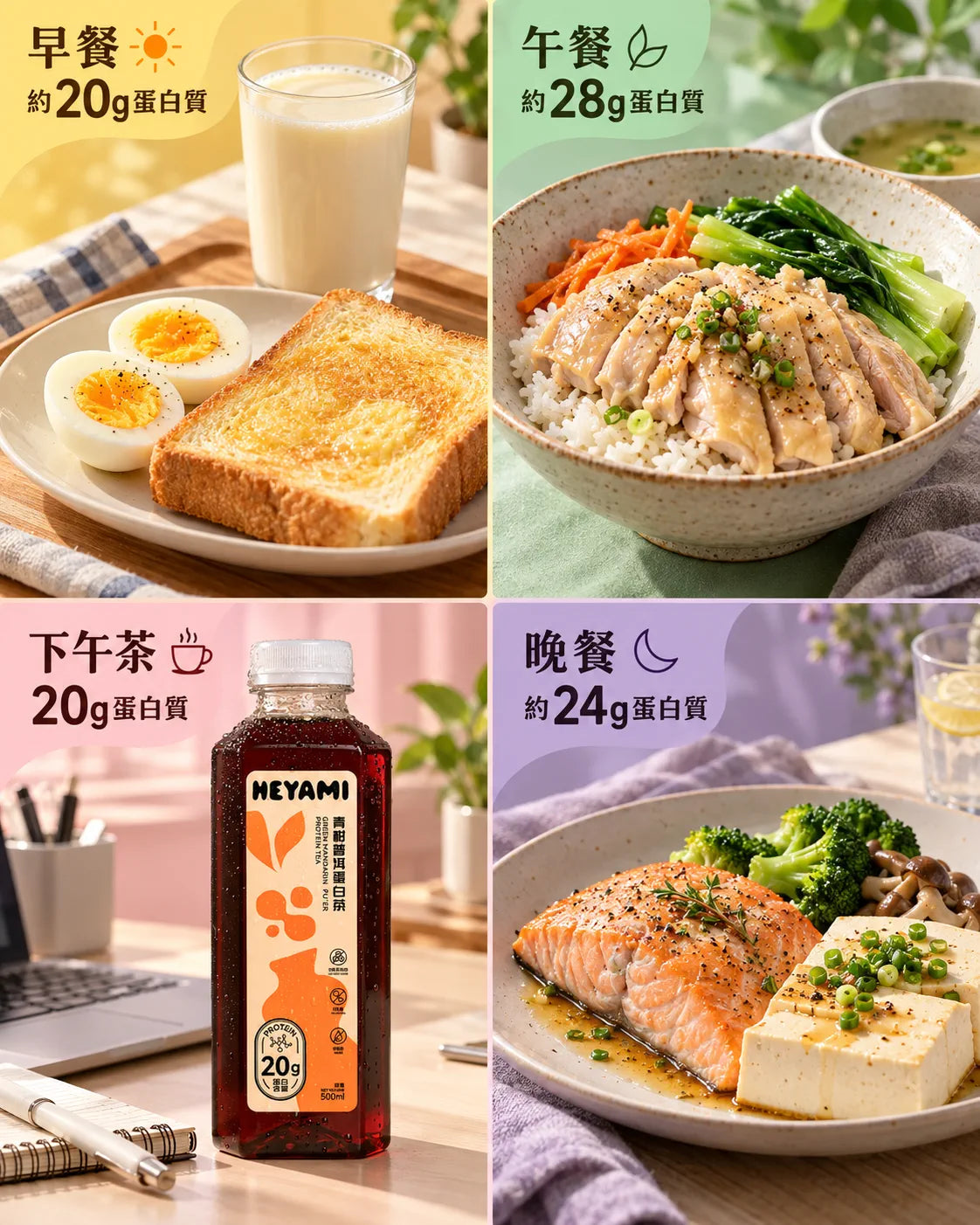
Without exercise habits, about 50 g a day is enough, and the afternoon-tea portion can be swapped for a cup of milk or a yoghurt. The most important point: breakfast should not be only starch — add an egg or a cup of soy milk and the whole day's distribution is much better.
Does eating too much protein harm the kidneys?
Short answer: For healthy adults with normal kidney function, existing research does not show that a moderately higher protein intake damages the kidneys; but people with chronic kidney disease need to limit protein as instructed by their doctor.
"Eating too much protein harms the kidneys" is the most common worry among older people. ISSN notes that in healthy, regularly exercising people there is no evidence that 1.4 to 2.0 g of protein per kilogram per day harms kidney function. However, the following people should consult a doctor or registered dietitian first and should not increase protein on their own:
- People diagnosed with chronic kidney disease, reduced kidney function, or who are on dialysis
- People with long-term illnesses such as diabetes or high blood pressure that may affect kidney function
- People taking certain medications long term
In addition, when you eat a lot of protein, remember to drink enough water.
What to note when supplementing with a protein drink?
Short answer: A protein drink should be a supplement on top of food; when buying, check the protein, calories, sugar and sweeteners per bottle, so you do not take in too much sugar or sweetener while supplementing protein.
- Protein source: whey protein isolate is high in purity and low in lactose, better suited to daily drinking.
- Sugar and sweeteners: "0 sugar" does not mean no sweeteners — see how "sugar-free" and "sweetener-free" differ for details.
- Calories: as an afternoon drink, around 100 kcal fits into the whole day's diet more easily.
- Comparing types: see our Hong Kong ready-to-drink protein drink comparison table.
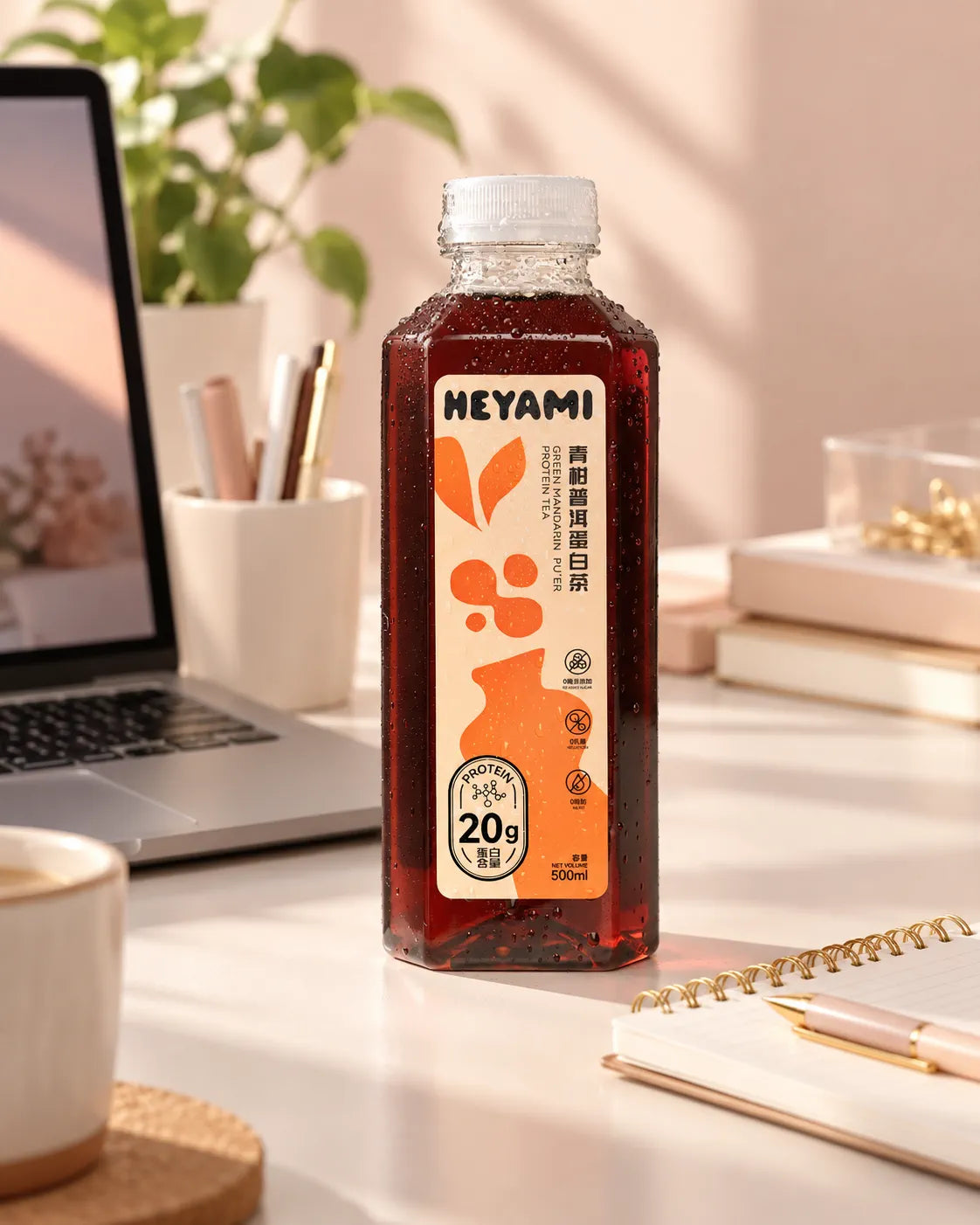
HEYAMI Green Mandarin Pu'er Protein Tea uses Pu'er tea, green mandarin and Xinhui tangerine peel as its tea base, with European whey protein isolate added: 20 g of protein and 95 kcal per bottle, 0 sugar, 0 fat, and no sweeteners of any kind added. It is not meant to replace meals, but to help you easily "drink" back the 20 g you are most likely to miss.
One bottle a day, to make up the 20 g you missed
HEYAMI Green Mandarin Pu'er Protein Tea | 20 g protein | 95 kcal | 0 sugar | sweetener-free
- First try: 8 bottles × 2 boxes $470, free delivery on two boxes
- One month's supply: 15 bottles × 2 boxes $810, free delivery on two boxes
- 10% off the monthly subscription, about $24.3 a day, pausable at any time
Frequently asked questions
How much protein does a person need a day?
A healthy adult needs about 0.83 g of protein per kilogram of body weight per day, for example about 50 g for 60 kg. For those over 65, 1.0 to 1.2 g per kg is advised; for people who exercise regularly, about 1.4 to 2.0 g.
How much protein is in an egg?
A 50 g egg contains about 6 g of protein, in both the white and the yolk. 3 eggs are about 18 g of protein.
How much protein is in a cup of soy milk?
A 250 ml cup of unsweetened soy milk contains about 7 to 8 g of protein, but concentration varies widely between brands, from about 2 g to 4 g per 100 ml, so check the nutrition label when buying.
How much protein should a 70 kg person take?
A healthy 70 kg adult needs about 58 g of protein a day; regular weight training can raise it to about 98 to 140 g; for those over 65 it is about 70 to 84 g.
How soon after exercise should you eat protein?
Eating a meal with 20 to 40 g of protein within one to two hours after exercise is preferable, but recent research considers the daily total and even distribution across meals more important, so do not fixate on the "golden half hour".
How can vegetarians get enough protein?
Vegetarians can get protein from tofu, soy milk, edamame, lentils, chickpeas, nuts and whole grains, combining different sources within the same day. Lacto-ovo vegetarians can also include eggs and dairy.
Can protein tea replace a meal?
Not advisable. A bottle of protein tea provides 20 g of protein and 95 kcal, suitable as a supplement at breakfast or afternoon tea, but it lacks the carbohydrate, fibre and other nutrients a meal needs, so it should go with a balanced diet.
When is the best time to drink HEYAMI protein tea?
Breakfast, afternoon tea and after exercise all work. A bottle at breakfast fills the protein missing from coffee and bread; use it at three in the afternoon instead of a sweet drink or snack; after exercise, just pair it with a normal dinner. One bottle — 20 g protein, 95 kcal, 0 sugar — is easy to fit in at any time of day.
About HEYAMI
Health should not be a punishment
PURITY YOU CAN SEE. POWER YOU CAN TASTE.
HEYAMI was founded by three Hong Kong friends who love sport. They believe supplementing protein should not belong only to the gym, nor be milky and sweet. So using green mandarin Pu'er and Xinhui tangerine peel familiar to Hong Kong people, together with European whey protein isolate, they made a clear, light, sweetener-free protein tea, letting health fit naturally into every day of work, exercise and life. Learn HEYAMI's story.
References
- WHO/FAO/UNU. Protein and amino acid requirements in human nutrition. WHO Technical Report Series 935, 2007
- Bauer J, et al. Evidence-based recommendations for optimal dietary protein intake in older people (PROT-AGE). JAMDA, 2013
- Jäger R, et al. International Society of Sports Nutrition Position Stand: Protein and Exercise. JISSN, 2017
- U.S. Department of Agriculture: FoodData Central