
Save 10% with a monthly subscription and get free delivery from two cases. Pause or cancel any time.
Protein Guide: daily needs, protein drinks and sweeteners
Home › Protein Guide
Protein Guide
No waffle, just answers. Every page here is put together by the HEYAMI editorial team, with data and research sources published openly so you can check them before you decide.
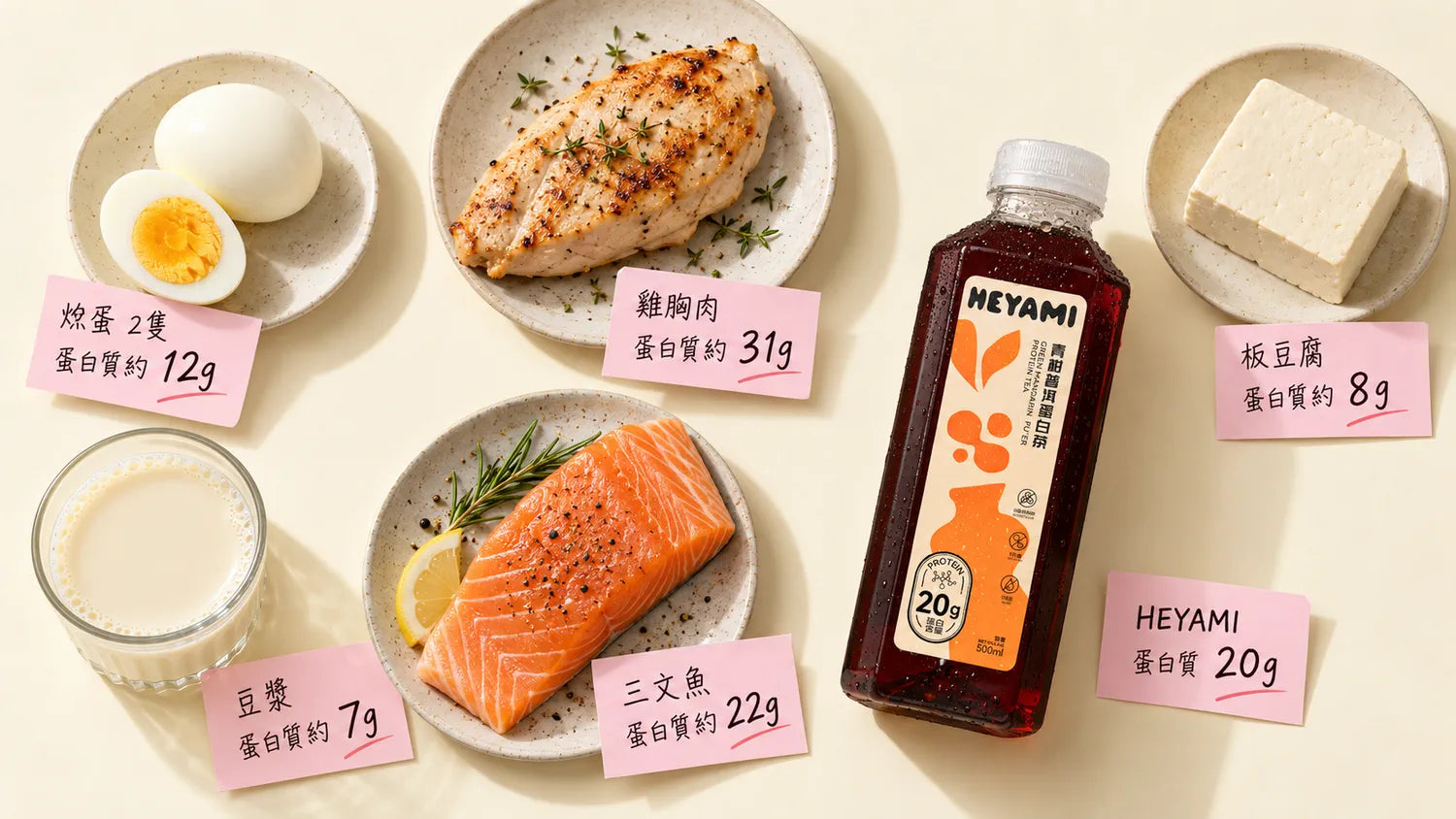
The one-line answer: a generally sedentary adult needs about 0.8 to 1.0 g of protein per kilogram of body weight each day, and active people 1.4 to 2.0 g. And "0 sugar" does not mean "no sweeteners" — under Hong Kong labelling rules a drink with no more than 0.5 g of sugar per 100 ml may be labelled "unsweetened", yet it can still contain sweeteners. The most practical thing you can do is read the ingredient list.
0.83gPer kg of body weight / day
3 typesReady-to-drink protein drinks
6Common sweeteners
4 stepsTo read an ingredient list
How much protein do you need each day?
Protein is not just for gym-goers. Whether or not you exercise, your body uses protein every day to repair muscle, make enzymes and keep your immune system working. The only real question is how much.
The simplest way to work it out is by body weight: body weight (kg) × 0.83 g, which is the basic daily requirement for a generally sedentary adult. Older adults, pregnant women and active people need more. You can also use our interactive calculator: just enter your weight.
Daily protein calculator + a 20-item Hong Kong food protein table
How do you choose a protein drink?
Ready-to-drink protein drinks on the market fall roughly into three groups: traditional protein shakes, clear protein drinks, and protein tea. Their protein content can be much the same, but the sugar, sweeteners and calories differ a great deal — and those are exactly the reason many people give up on them.
If you have given up on protein drinks because they are "too thick, too sweet, too heavy", the problem is usually not the protein itself but the form you drink it in.
3 types of ready-to-drink protein drinks: sugar, sweeteners and calories in one table
"No sugar" and "no sweeteners" are two different things
Many people assume "0 sugar" means "no sweetness". In practice, a label of "no sugar" only means the sugar content is no more than 0.5 g per 100 ml; the product can still contain sweeteners such as aspartame, erythritol or sucralose to keep it sweet.
If your goal is to cut back on your dependence on sweetness, or you would rather not drink sweeteners, you need to learn to read the ingredient list — not the big words on the front, but the ingredients on the back.
6 common sweeteners, the WHO guidance, and a 4-step way to read an ingredient list
HEYAMI product facts
The three pages below explain the ingredients, nutrition and design decisions behind HEYAMI Green Mandarin Pu'er Protein Tea. We choose to publish everything, because transparency is one of our brand principles.
What whey protein isolate isHow it differs from whey concentrate, and why it can be clear
Full ingredients and nutritionEvery ingredient and every per-bottle figure published
How it differs from a protein shakeMouthfeel, sweetness, calories and lactose compared item by item
Brand informationThe company, where it is made, the price and how to buy
Whey protein facts Ingredients and nutrition Protein tea vs protein shake What are the benefits of whey protein isolate (WPI)? See Green Mandarin Pu'er Protein Tea
FAQ
How much protein is needed each day? For a generally sedentary adult, about 0.83 g per kilogram of body weight per day; for active people who train, the International Society of Sports Nutrition suggests raising this to 1.4 to 2.0 g.
Does "0 sugar" mean no sweetness? It does not. A drink with no more than 0.5 g of sugar per 100 ml may be labelled "no sugar", yet it can still contain sweeteners. HEYAMI Green Mandarin Pu'er Protein Tea has 0 sugar and also no added sweeteners of any kind.
Can I drink protein tea if I do not exercise? Yes. Protein is a nutrient you need every day, and it is not limited to people who train. Each bottle of HEYAMI protein tea has 95 kcal, 0 sugar and 0 fat, making it a good everyday swap for a sweet drink.
How is HEYAMI protein tea different from an ordinary protein shake? The mouthfeel is light and tea-like, with 0 sugar, no added sweeteners and 0 lactose, 20 g of protein and 95 kcal per bottle, and it is ready to drink without any powder to mix.
Are there sources for the health content? Yes. The articles cite public research and guidance from the World Health Organization (WHO), the International Agency for Research on Cancer (IARC) and JECFA, and list the sources. The content is general information only and cannot replace personal advice from a doctor or registered dietitian.
Finished reading — what next? For a first try, choose 8 bottles × 2 boxes; if you want to drink it every day, 15 bottles × 2 boxes on a monthly subscription works out at $24.3 per bottle, with free delivery on two boxes or more.