Save 10% with a monthly subscription and get free delivery from two cases. Pause or cancel any time.
Home › Health Guide › Buckwheat Tea Benefits and Cautions
Tea Knowledge
Buckwheat tea benefits and cautions: does it contain caffeine? How does it differ from barley tea? All in one article
Buckwheat tea has become many people's "caffeine-free choice" at night in recent years, but not everyone should drink it, and not all buckwheat teas are caffeine-free. Flip through 6 myth cards, then take a 30-second test to pick the one that suits you.

Green tea + buckwheat aroma20g protein85 kcal0 sweeteners
Short answer: Buckwheat tea is a grain tea brewed from roasted buckwheat kernels; it is itself caffeine-free and gluten-free, with a nutty roasted aroma, and contains polyphenols such as rutin. Note two groups: people allergic to buckwheat (which can be severe) and kidney patients who need to control potassium and phosphorus. Buckwheat tea blended with green tea does contain caffeine.
0caffeine (pure buckwheat tea)
0gluten
85kcal HEYAMI Buckwheat Green Tea
20gprotein / bottle
30-second highlights
- Caffeine: pure buckwheat tea has none; buckwheat teas blended with green tea or oolong do, though the exact amount depends on the recipe and brewing, and no specific mg is declared on the product.
- Difference from barley tea: both are caffeine-free, but barley contains gluten and buckwheat does not.
- Tartary vs common buckwheat: Tartary buckwheat is higher in rutin and slightly bitter; common buckwheat is fragrant and mild.
- Who should not drink it: buckwheat allergy, kidney disease requiring potassium/phosphorus control, and those taking blood-sugar-lowering medication (ask a doctor first).
- Want to drink it in the day and supplement protein too: Buckwheat Green Protein Tea has 20 g protein and 1.0 g carbohydrate per bottle.
What kind of tea is buckwheat tea?
Buckwheat tea is not made from tea leaves but from buckwheat kernels roasted and then brewed — a "grain tea". In East Asian tea culture, besides traditional tea leaves, grain tea has always been part of everyday drinking: Japan has soba tea, Korea has barley tea, and Hong Kong tea shops also carry golden buckwheat and black Tartary buckwheat.
There are mainly two kinds on the market:
🌾 Common buckwheat
- Sweet, mild taste
- Japanese buckwheat tea mostly uses this
🟡 Tartary buckwheat
- Noticeably higher rutin content
- Slightly bitter taste, yellow-green brew
- Golden buckwheat and black Tartary buckwheat belong here
Brewing is very simple: about 5 g of buckwheat kernels with 300–500 ml of water at 90°C or above, steeped for 3–5 minutes. The softened kernels can be eaten directly.
6 buckwheat tea myths: tap a card for the truth
How do buckwheat tea, barley tea and green tea differ?
Tap to see: how do buckwheat tea, barley tea and green tea differ?
Grain tea · caffeine-free
Buckwheat tea
Brewed from roasted buckwheat kernels, with a nutty, roasted taste. Buckwheat belongs to the Polygonaceae family and is gluten-free, containing polyphenols such as rutin; Tartary buckwheat is higher in rutin.
Watch out: buckwheat allergy; kidney patients should ask a doctor (potassium, phosphorus).
Grain tea · caffeine-free
Barley tea
Brewed from roasted barley, very common in Korea and Japan, with a taste like roasted rice and barley. Barley is a gluten-containing grain.
Watch out: people with coeliac disease or gluten sensitivity must avoid it.
Tea leaves · contains caffeine
Green tea
An unfermented tea, retaining the most catechins, fresh with a grassy aroma. Contains natural tea caffeine.
Watch out: if sensitive to caffeine, control how much you drink at night.
Green tea + buckwheat · contains caffeine
HEYAMI Buckwheat Green Protein Tea
Green tea as the base, with a roasted buckwheat aroma added, plus 20 g of whey protein isolate. Refreshing and light, 85 kcal and 1.0 g carbohydrate, the lowest-calorie of the three.
Watch out: contains green tea caffeine, best drunk in the day; not suitable for those allergic to buckwheat or milk protein.
| Buckwheat tea | Barley tea | Green tea | Coming Soon — not available to purchase yet HEYAMIBuckwheat Green Tea | |
|---|---|---|---|---|
| Caffeine | None | None | Yes | Yes (green tea) |
| Gluten | None | Yes | None | — |
| Taste | Nutty roasted aroma | Roasted rice and barley | Fresh, grassy | Green tea freshness + buckwheat aroma |
| Protein | Close to 0 | Close to 0 | Close to 0 | 20 g / bottle |
| Drinking at night | Fine | Fine | If sensitive, avoid | Best in the day |
Green tea caffeine is a reference value per 240 ml brewed.
Buckwheat tea benefits: what can really be claimed?
Short answer: Buckwheat contains polyphenols such as rutin and quercetin; together with being caffeine-free and close to zero calories, its most practical benefits are: you can drink it at night, it replaces sugary drinks, and it quenches thirst with a grain aroma. Claims such as protecting the cardiovascular system and stabilising blood sugar have preliminary research, but a cup of tea cannot replace medication.
- You can drink it at night too: pure buckwheat tea is caffeine-free and will not affect sleep.
- A zero-calorie replacement for sugary drinks: replace milk tea and soft drinks and you naturally cut sugar and calories.
- Contains polyphenols such as rutin: Tartary buckwheat has more, and it has been a research focus in recent years, but the effects still need more human studies to confirm.
- Grain aroma, easy to take: people who dislike tea's bitterness usually accept buckwheat's roasted aroma.
Buckwheat tea cautions: who should not drink it?
⚠️ Buckwheat allergy
Reactions can range from a rash to difficulty breathing — very serious.
Avoid buckwheat tea, buckwheat noodles and Buckwheat Green Protein Tea entirely.
🫘 Kidney disease requiring potassium and phosphorus control
Buckwheat contains potassium and phosphorus; people with poor metabolism need to be careful.
Ask a doctor before drinking.
💊 Taking blood-sugar-lowering medication
Buckwheat is traditionally thought to help stabilise blood sugar, so drinking large amounts needs care.
Tell your doctor that you are drinking it.
😴 Chose a version blended with tea leaves
Buckwheat green tea and buckwheat oolong contain caffeine.
If sensitive to caffeine, drink them in the day.
30-second test: which grain tea suits you?
Not everyone needs to choose a protein tea. Answer 3 questions and we will tell you straight which one suits you best:
🌾 Which grain tea suits you?
3 questions
When do you usually drink?
What do you most want from it?
Any of the following?

Your best match
Buckwheat Green Protein Tea
Drink it in the day; refreshing with a lingering buckwheat aroma, one bottle supplements 20 g of protein at 85 kcal.
Explore Buckwheat — Coming Soon🌾
Your best match
Pure buckwheat tea
Caffeine-free, so you can drink it at night. Teabags or kernels, steeped in water at 90°C or above for 3–5 minutes.
To supplement protein in the day, add a bottle of Explore Buckwheat — Coming Soon.
🍵
Your best match
Barley tea
Caffeine-free, with a rich barley aroma — excellent with rice. But barley contains gluten, so choose buckwheat tea if you must avoid gluten.
Buckwheat Green Protein Tea: refreshing, with a lingering buckwheat aroma — Coming Soon
Each 500ml HEYAMI bottle provides 20g of European whey protein isolate. Contains milk; unsuitable for people with a milk protein allergy. Oolong and Buckwheat Green Tea are Coming Soon.
HEYAMI's inspiration was to combine the mellow grain aroma of buckwheat with the freshness of green tea, making a gentle, smooth tea with layers. Even with 20 g of protein added, we wanted to keep the light, easy-to-drink feel of a clear tea, so that supplementing protein feels as natural as everyday tea drinking.
🍃 How does it taste?
- The familiar fresh fragrance of green tea
- A lingering roasted buckwheat aroma
- Refreshing, comfortable, not thick
📋 Nutrition label
- 500ml · 20 g whey protein isolate
- 85 kcal · 1.0 g carbohydrate
- 0 sugar · 0 lactose · 0 sweeteners
Suited to people who usually like clear tea and grain tea aromas, or who do not much like a strong tea taste. It has the lowest calories of the three, good during fat loss or with bread at breakfast. Remember it contains green tea, so contains natural tea caffeine, and is not suitable for those allergic to buckwheat or milk protein.
Light, and a little more filling
Coming Soon — not available to purchase yet
A bottle of Buckwheat Green Protein Tea = 20 g protein, for only 85 kcal.
- Green tea freshness + roasted buckwheat aroma
- 0 sugar · 0 lactose · 0 sweeteners
- Coming Soon — not available to purchase yet
Compare with the other two
Buckwheat Green Protein Tea
Coming Soon — not available to purchase yet
The familiar fresh fragrance of green tea, with a lingering roasted buckwheat aroma.
green tea freshnessroasted grain aromalightlowest calories of the three
RefreshingTasteRich
- Who it suits
- People who like clear tea and grain tea aromas, or who do not much like a strong tea taste.
- Nutrition
- 500ml · 20 g whey protein isolate · 85 kcal · 0 sugar · 0 sweeteners
Grain tea is itself part of everyday East Asian drinking culture; we combined the mellow grain aroma of buckwheat with the freshness of green tea.

Green Mandarin Pu'er Protein Tea
The rich tea notes of Pu'er, with the fresh fragrance of green mandarin peel and Xinhui tangerine peel.
Pu'er tea notesgreen mandarin peelXinhui tangerine peelrich and deep
RefreshingTasteRich
- Who it suits
- People who usually like ripe Pu'er and tangerine peel fragrance, or want a tea with depth. Best after a meal.
- Nutrition
- 500ml · 20 g whey protein isolate · 95 kcal · 0 sugar · 0 sweeteners
Mandarin peel with Pu'er is itself a very distinctive Chinese tea pairing; we have reimagined it as a refreshing, non-thick protein tea.

Oolong Protein Tea
Coming Soon — not available to purchase yet
No other flavour added, just pure oolong fragrance — refreshing and smooth.
Pure oolong fragrancerefreshing and smoothsweet aftertastegood for a first try
RefreshingTasteRich
- Who it suits
- People who like pure tea taste and do not want too much extra fragrance, or those trying protein tea for the first time.
- Nutrition
- 500ml · 20 g whey protein isolate · 92 kcal · 0 sugar · 0 sweeteners
Inspired by the gongfu tea culture of Fujian and Guangdong, which prizes the aroma and sweet aftertaste of the leaves themselves, we let the tea fragrance take the lead.
Available sizes & offers: Green Mandarin Pu'er
These options apply only to the available Green Mandarin Pu'er Protein Tea. Oolong and Buckwheat Green Tea are Coming Soon, with no purchases or mixed-flavour bundles yet.
- ✓ 20 g whey protein isolate per bottle
- ✓ 0 sugar · 0 sweeteners
- ✓ 0 lactose · 0 fat
Green Mandarin Pu'er only. A single case is $235 for 8 bottles or $405 for 15. The current monthly plan gives 10% off. Shipping, offers and final totals are shown on the product page and at checkout.
Frequently asked questions
Does buckwheat tea contain caffeine?
Pure buckwheat tea is brewed from roasted buckwheat kernels and is itself caffeine-free, which is why many people drink it at night. Note that buckwheat teas blended with green tea or black tea (including HEYAMI Buckwheat Green Protein Tea) do contain the natural caffeine of tea leaves.
Can buckwheat tea be drunk at night?
Pure buckwheat tea is caffeine-free, so drinking it at night is generally fine. If it is a version blended with tea leaves, people sensitive to caffeine should best drink it in the day.
Who should not drink buckwheat tea?
First, people allergic to buckwheat — a buckwheat allergy can be severe and must be avoided; second, people with kidney disease who need to control potassium and phosphorus, who should ask a doctor before drinking; people taking blood-sugar-lowering medication are also advised to ask a doctor first.
What is the difference between buckwheat tea and barley tea?
Both are caffeine-free grain teas, but from different sources: barley tea uses roasted barley, a gluten-containing grain, with a taste like roasted rice and barley; buckwheat tea uses buckwheat, which belongs to the Polygonaceae family and is not a wheat, so it is gluten-free, with a nutty roasted aroma. Buckwheat contains rutin; barley tea does not.
Does buckwheat tea contain gluten?
Although buckwheat is called a "wheat" (in Chinese), it is not related to wheat or barley and is itself gluten-free. However, some teabags may be processed on the same production line as other grains, so people with coeliac disease should check the allergen labelling on the packaging.
Can buckwheat tea help with weight loss?
Buckwheat tea is itself close to zero calories, and using it to replace sugary drinks reduces calorie intake — that is its most practical help. But there is not enough evidence that drinking buckwheat tea itself makes people lose weight.
What is the difference between Tartary buckwheat tea and common buckwheat tea?
Tartary buckwheat has a noticeably higher rutin content than common buckwheat, with a slightly bitter taste and a yellow-green colour; common buckwheat is sweeter and milder. Golden buckwheat and black Tartary buckwheat are both common Tartary buckwheat products.
How much buckwheat tea can I drink a day?
As an everyday tea, a few cups a day is a common amount; kidney patients should follow a doctor's advice. The brewed kernels can be eaten directly, but remember to count them into your calories and carbohydrate.
Where can I buy buckwheat tea?
Plain buckwheat tea bags or kernels are generally sold by supermarkets, tea shops and online retailers. HEYAMI Buckwheat Green Protein Tea provides 20g of whey protein isolate per bottle but is Coming Soon and is not available to purchase yet.
Is HEYAMI Buckwheat Green Protein Tea very strongly buckwheat-flavoured?
Not like a strong buckwheat tea. It uses the familiar green tea as a base, drinking refreshing and light, with a lingering roasted buckwheat aroma in the middle — gentler and smoother. People who like clear tea and not a strong tea taste will find it easy to take.
Further reading
References
Product figures are taken from HEYAMI nutrition labels. If you have a condition such as kidney disease that requires limiting protein, please ask a doctor first.
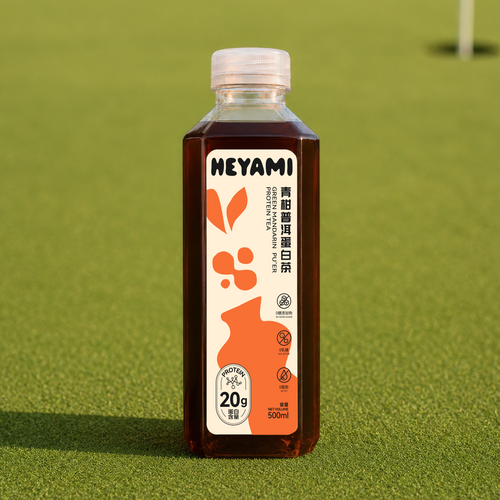
One bottle tops up the 20 g you missed
Green Mandarin Pu'er Protein Tea: 20 g protein, 95 kcal, 0 sugar, no added sweeteners.
View Green Mandarin Pu'er Protein TeaContinue reading
-

What to do about lactose intolerance? Symptoms, a 30-second self-test, what you can drink, and how to get enough protein
Learn how lactose intolerance differs from milk protein allergy, co...
-

Does oolong tea have caffeine? How it differs from green tea and Pu'er, plus oolong tea benefits and when to stop drinking it
Does oolong tea have caffeine? How it differs from green tea and Pu...
-

Bloated or uncomfortable after protein powder? 5 common questions + how to read an ingredient list
Bloated or gassy after protein powder? Five common questions explai...