Save 10% with a monthly subscription and get free delivery from two cases. Pause or cancel any time.
Home › Health Guide › Protein powder questions
Nutrition Basics
Bloated or uncomfortable after protein powder? 5 common questions + how to read an ingredient list
Bloated, gassy, or told by an older relative that it harms your kidneys… most of the time the cause is not protein itself but the formula, the sugar alcohols and how you drink it.

20g whey isolate0 sugar0 sweeteners0 lactose
Short answer: For adults with normal kidney function, drinking protein powder in the right portions is generally safe. The most common bloating and diarrhoea are usually caused by lactose, sugar alcohols, or simply drinking too much at once; choosing a whey isolate, avoiding sugar alcohols and sweeteners, and having 20–30 g at a time can avoid most problems. If you already have kidney or liver disease, ask a doctor first.
5common questions
<1%whey isolate lactose
20gjust-right per serving
0HEYAMI sweeteners
30-second highlights
- Bloating and diarrhoea: mostly caused by the lactose in whey concentrate, or the sugar alcohols used for sweetness (965, 420, 967).
- Kidney harm: no evidence yet for people with normal kidney function; those with existing chronic kidney disease need to control the total amount.
- Calories: whether you gain weight depends on how you mix it and your whole day's total calories, not the protein itself.
- Do not want to mix powder or drink sweeteners? Consider ready-to-drink protein tea (there is a 30-second flavour test at the end).
5 common questions about drinking protein powder
Each question has a different cause and a different fix. Tap a button below to see "why it happens" and "how to avoid it" — then use the three-layer ingredient guide to judge a product yourself.
Tap the one you worry about most 👇
Most common
Bloating & diarrhoea
Bloating, lots of gas, even diarrhoea one or two hours after drinking.
Why it happens: three common culprits: ① the lactose in whey protein concentrate (WPC); ② the sugar alcohols used for sweetness, such as maltitol, sorbitol and xylitol; ③ mixing too much at once and drinking too fast.
How to avoid: choose a whey isolate (WPI, less than 1% lactose); check the ingredient list to avoid sugar alcohols such as 965, 420, 967; 20–30 g at a time is enough, drink slowly.
HEYAMI: HEYAMI uses whey isolate, is labelled 0 lactose, and has no sugar alcohols and no sweeteners.
Depends on the person
Kidney harm?
The biggest worry, and what older relatives mention most.
Why it happens: for adults with normal kidney function, a 2018 meta-analysis found no kidney-function harm from a high-protein diet. The real risk is having existing chronic kidney disease, where excessive protein adds burden.
How to avoid: normal kidney function: keep your whole-day protein in line with your weight (generally 0.8–1.2 g/kg, more for sports people) and you can rest easy. Kidney disease, or a high kidney index on a health check: definitely ask a doctor first.
HEYAMI: one bottle of 20 g is just one meal's portion — more is not better.
A portion issue
Smelly gas & breath
Noticeably smellier gas after drinking more.
Why it happens: when a large amount of protein is taken at once, the undigested portion reaches the large intestine and is broken down by bacteria, producing sulphur gases. Sugar alcohols also make the gut produce gas.
How to avoid: spread the protein across several meals; drink more water and eat more vegetables; start with half a portion.
HEYAMI: 20 g a bottle, and you can split it into two drinks; keep any leftover chilled.
A calorie issue
Gaining weight instead
You thought protein powder would help you slim down, but the scale went up.
Why it happens: protein powder itself will not make you fat, but "full-fat milk + banana + peanut butter" can reach 400–600 kcal a cup; some ready-to-drink styles also have a dozen or so grams of sugar.
How to avoid: check the calories and sugar on the nutrition label; mix with water or an unsweetened drink; treat it as a supplement and do not add an extra cup on top of a full meal.
HEYAMI: all three HEYAMI flavours are 85–95 kcal a bottle, 0 sugar and 0 fat.
Check the ingredients
Palpitations & headache
A racing heart or insomnia after drinking it, thinking it is a protein problem.
Why it happens: many "pre-workout" formulas add caffeine, creatine and beta-alanine (which causes skin tingling). Too much caffeine at once, or drinking it before bed, can affect heart rate and sleep.
How to avoid: check clearly whether caffeine and other stimulants are added; avoid caffeine-containing formulas after the afternoon.
HEYAMI: HEYAMI is made with real tea and contains natural tea caffeine; those sensitive to caffeine are advised to drink it before 4 pm.
For the most common bloating, the first step is to switch to a whey isolate and avoid sugar alcohols. See the 0-lactose protein tea
Who needs to be especially careful drinking protein powder?
Short answer: People with chronic kidney or liver disease, those allergic to milk or soy protein, pregnant and breastfeeding women, and children and adolescents should ask a doctor or registered dietitian before drinking it.
🫘 Chronic kidney disease, high kidney index
You need to control your whole-day protein total — it is not a case of the more the better.
Ask a doctor first, and set the amount with a dietitian.
🥛 Milk protein allergy
Different from lactose intolerance: it is an immune reaction to the protein itself and can be serious.
Avoid whey and casein completely, including HEYAMI.
🤰 Pregnant, breastfeeding
Protein needs are higher than usual, but watch the caffeine and other additives in the formula.
Ask your obstetrician first; keep an eye on your total caffeine for the day.
🧒 Children, adolescents
A normal diet is usually enough, and long-term studies are lacking.
Adding protein powder on your own is not advised; look at the everyday diet first.
People with special health needs such as chronic kidney disease should be individually assessed by a registered dietitian or medical staff, and should not treat protein powder as their only protein source.
How to read a protein powder ingredient list? 6 things you must check
The easiest place to get caught out when buying protein powder is not the price but the ingredient list. Below, using a sample label, we show you how to spot lactose, sweeteners and sugar alcohols in 30 seconds.
Tap the six orange dots below to read an ingredient list
The following is a sample label for a fictitious protein powder, gathering the most common points to watch.
30-second check: three yes/no questions
- Is protein purity 80% or more? (protein grams ÷ serving weight; 24g ÷ 30g = 80%)
- Does the ingredient list contain sweeteners? Look for 955, 950, 951, 960.
- Are sugar alcohols (maltitol, sorbitol) near the front? Earlier means more bloating for many people.
Nutrition Facts(sample)
Per serving 30g
Protein24 g
Total carbohydrate3 g
— Sugars1 g
— Polyols 1.5 g
Ingredients: whey protein concentrate , cocoa powder, thickener (xanthan gum) , sweeteners (sucralose 955, acesulfame potassium 950) , maltitol, natural flavouring, caffeine
1 | Protein source
Whey Protein Isolate less than 1% lactose, low fat; Concentrate about 5% lactose, cheaper but more likely to bloat; Hydrolysed the easiest to digest but the most expensive and with a bitter taste.
Whey Protein Isolate less than 1% lactose, low fat; Concentrate about 5% lactose, cheaper but more likely to bloat; Hydrolysed the easiest to digest but the most expensive and with a bitter taste.
2 | Protein per serving
Check how many grams of protein "per serving" and how many grams of powder "per serving". Protein ÷ powder weight per serving = protein purity, e.g. 24 g ÷ 30 g = 80%. Generally 20–30 g at a time is enough.
Check how many grams of protein "per serving" and how many grams of powder "per serving". Protein ÷ powder weight per serving = protein purity, e.g. 24 g ÷ 30 g = 80%. Generally 20–30 g at a time is enough.
3 | Sweeteners
Sucralose (955), acesulfame potassium (950), aspartame (951) and steviol glycosides (960) are all common sweeteners. To avoid them, use the ingredient checker to paste an ingredient list and check instantly.
Sucralose (955), acesulfame potassium (950), aspartame (951) and steviol glycosides (960) are all common sweeteners. To avoid them, use the ingredient checker to paste an ingredient list and check instantly.
4 | Sugar alcohols
Maltitol (965), sorbitol (420), xylitol (967), erythritol (968). Many people's bloating and diarrhoea come from these.
Maltitol (965), sorbitol (420), xylitol (967), erythritol (968). Many people's bloating and diarrhoea come from these.
5 | Thickeners / emulsifiers
Xanthan gum, carrageenan, soy lecithin and so on make the texture thicker. People with sensitive stomachs can note which one they react to.
Xanthan gum, carrageenan, soy lecithin and so on make the texture thicker. People with sensitive stomachs can note which one they react to.
6 | Extra stimulants
Caffeine, creatine, beta-alanine, green tea extract. Most common in pre-workout formulas; be careful drinking them at night.
Caffeine, creatine, beta-alanine, green tea extract. Most common in pre-workout formulas; be careful drinking them at night.
| Ingredient / additive | In plain language |
|---|---|
| Whey concentrate (WPC) | About 5% lactose; cheaper, more bloating for sensitive stomachs |
| Whey isolate (WPI) | Under 1% lactose, low fat; pricier but lighter |
955 Sucralose | Sweetener: no calories, very sweet |
950 Acesulfame K | Sweetener: often paired with 955 |
965 Maltitol | Sugar alcohol: fewer calories, but a lot at once loosens stools |
| Xanthan / carrageenan | Thickener: makes it creamier; a few people notice gut effects |
Want to try it right away? Go to the "sugar-free ≠ sweetener-free" article, paste in the ingredient list from the can at home and it will flag all the sweeteners for you instantly.
Whey, plant protein or ready-to-drink protein tea — how to choose?
The three most common choices each have pros and cons. Tap the one you care about most and the table will highlight the answer:
Tap one:
| Whey concentrate powder | Whey isolate powder | Plant protein powder | HEYAMIprotein tea | |
|---|---|---|---|---|
| Lactose | About 5% | <1% | None | Labelled 0 lactose |
| Sweeteners | Mostly yes | Mostly yes | Mostly yes | None |
| How to drink | Mix powder, shake a bottle | Mix powder, shake a bottle | Mix powder, shake a bottle; powdery | Ready to drink |
| Taste | Shake, thick | Clearer | Powdery, grassy | Refreshing like tea |
Lactose figures are general reference values; brands differ.


How to drink more comfortably? 4 habits
① 20–30 g at a time is enoughDrinking 50 g at once does not double the absorption, and more easily causes bloating and smelly gas. Splitting it across two or three meals is better.
② Food first, protein powder to fill gapsEggs, fish and tofu come first; only for the meal where breakfast is just bread and coffee, or lunch a bowl of noodles, use a protein drink to top up.
③ Watch the calories; do not add so much it becomes dessertMix with water or an unsweetened drink; for ready-to-drink versions, check the sugar and calories clearly.
④ Drink more water and record your reactionsFor the first two weeks on a new product, note bloating, skin and sleep, changing only one thing at a time so you know what suits you.
Not sure how much protein you need a day? Use the protein intake calculator to enter your weight, then add what you have eaten today and see at a glance how much is missing.
Do not want to mix powder or drink sweeteners: what is protein tea?
Each 500ml HEYAMI bottle provides 20g of European whey protein isolate. Contains milk; unsuitable for people with a milk protein allergy. Oolong and Buckwheat Green Tea are Coming Soon.
Many people do not lack the will to supplement protein, but cannot stand the shake taste of protein powder and the aftertaste of sweeteners. HEYAMI's approach is to use real tea as the base and add 20 g of imported European whey protein isolate, ready to drink straight from the bottle:
- Since our first product, not a drop of sweetener has been added — sweetness comes from the tea itself;
- Nutrition label: 0 sugar, 0 fat, 0 lactose, 85–95 kcal per bottle;
- Clear like tea, without the thick feel of a shake — natural to drink even in the office.
HEYAMI's ready-to-drink protein tea achieves "20 g protein + 0 sugar + 0 sweeteners". Three flavours — tap to see the differences:
Three flavours — tap to see the differences
Green Mandarin Pu'er Protein Tea
The rich tea notes of Pu'er, with the fresh fragrance of green mandarin peel and Xinhui tangerine peel.
Pu'er tea notesgreen mandarin peelXinhui tangerine peelrich and deep
RefreshingTasteRich
- Who it suits
- People who usually like ripe Pu'er and tangerine peel fragrance, or want a tea with depth. Best after a meal.
- Nutrition
- 500ml · 20 g whey protein isolate · 95 kcal · 0 sugar · 0 sweeteners
Mandarin peel with Pu'er is itself a very distinctive Chinese tea pairing; we have reimagined it as a refreshing, non-thick protein tea.
Oolong Protein Tea
Coming Soon — not available to purchase yet
No other flavour added, just pure oolong tea fragrance — refreshing and smooth.
Pure oolong tea fragrancerefreshing and smoothsweet aftertastegood for a first try
RefreshingTasteRich
- Who it suits
- People who like pure tea taste and do not want too much extra fragrance, or those trying protein tea for the first time.
- Nutrition
- 500ml · 20 g whey protein isolate · 92 kcal · 0 sugar · 0 sweeteners
Inspired by the gongfu tea culture of Fujian and Guangdong, which prizes the aroma and sweet aftertaste of the leaves themselves, we let the tea fragrance take the lead.

Buckwheat Green Protein Tea
Coming Soon — not available to purchase yet
The familiar fresh fragrance of green tea, with a lingering roasted buckwheat aroma.
green tea freshnessroasted grain aromalightlowest calories of the three
RefreshingTasteRich
- Who it suits
- People who like clear tea and grain tea aromas, or who do not much like a strong tea taste.
- Nutrition
- 500ml · 20 g whey protein isolate · 85 kcal · 0 sugar · 0 sweeteners
Grain tea is itself part of everyday East Asian drinking culture; we combined the mellow grain aroma of buckwheat with the freshness of green tea.
🍵 Choose your flavour in 30 seconds
Answer 3 and you get a result
Which tea do you usually drink?
When do you want to drink it?
In flavour you like…
Your best match
Green Mandarin Pu'er Protein Tea
People who usually like ripe Pu'er and tangerine peel fragrance, or want a tea with depth. Best after a meal.
See Green Mandarin Pu'er Protein TeaA flavour to watch for
Oolong Protein Tea
Coming Soon — not available to purchase yet
People who like pure tea taste and do not want too much extra fragrance, or those trying protein tea for the first time.
Explore Oolong — Coming SoonA flavour to watch for
Buckwheat Green Protein Tea
Coming Soon — not available to purchase yet
People who like clear tea and grain tea aromas, or who do not much like a strong tea taste.
Explore Buckwheat — Coming SoonAvailable sizes & offers: Green Mandarin Pu'er
These options apply only to the available Green Mandarin Pu'er Protein Tea. Oolong and Buckwheat Green Tea are Coming Soon, with no purchases or mixed-flavour bundles yet.
- ✓ 20 g whey protein isolate per bottle
- ✓ 0 sugar · 0 sweeteners
- ✓ 0 lactose · 0 fat
Green Mandarin Pu'er only. A single case is $235 for 8 bottles or $405 for 15. The current monthly plan gives 10% off. Shipping, offers and final totals are shown on the product page and at checkout.
Frequently asked questions
Will drinking protein powder every day have side effects?
A healthy adult drinking the recommended portion (20–30 g at a time, whole-day protein not exceeding their own needs) every day will generally not have problems. The most common discomforts are bloating and diarrhoea, mostly related to lactose, sugar alcohols or drinking too much at once, not the protein itself. People with existing kidney or liver disease should ask a doctor first.
Does drinking protein powder harm the kidneys?
For adults with normal kidney function, research has not yet shown that a high-protein diet harms kidney function. What really needs care is people who already have chronic kidney disease, or whose kidney-function index on a health check is high; they must control their protein total as advised by a doctor or dietitian.
Does drinking protein powder make you fat?
Whether you gain weight depends on your whole-day total calories, not on the protein powder itself. A scoop of protein powder is about 100–130 kcal, but mixed with full-fat milk, banana and peanut butter a cup can reach over 400 kcal. To control weight, choose a low-calorie, 0-sugar version and treat it as a top-up when a meal is short on protein. HEYAMI is 85–95 kcal a bottle.
Will girls get bulky from drinking protein powder?
No. Muscle growth mainly depends on resistance training, enough calories and hormones; supplementing protein alone will not make anyone "bulky". Many women take protein to feel fuller and for their skin, hair and daily activity needs.
When is the best time to drink protein powder?
The most practical times are within an hour or two after exercise, or at the meal where breakfast protein is short. Rather than a "golden window", the whole-day protein total and its even distribution across meals matter more. If you do not know how much you need a day, use the protein intake calculator to work it out.
Can I drink protein powder without exercising?
Yes. Protein is not needed only by gym-goers; people whose breakfast is just bread and coffee, or who eat little meat in a day, may fall short. But people who do not exercise usually do not need to drink much extra — one portion a day to fill the gap in meals is enough.
Can people with lactose intolerance drink whey protein?
It depends on which whey. Whey concentrate (WPC) has about 5% lactose, about 1.5 g in a 30 g scoop; whey isolate (WPI) has less than 1%. Many lactose-intolerant people have no problem with whey isolate, but if it is a "milk protein allergy" you must avoid whey completely. For details see how to supplement protein with lactose intolerance.
Who cannot drink protein powder?
People with chronic kidney or liver disease; those allergic to milk protein (if it is whey) or to soy (if it is soy protein); pregnant and breastfeeding women; and children and adolescents should all ask a doctor or registered dietitian first.
What is the difference between protein tea and protein powder?
Protein powder has to be mixed and shaken, its texture on the thick side, and many also add sweeteners or sugar alcohols for sweetness. HEYAMI protein tea is a tea you drink straight from the bottle, using whey protein isolate, with 20 g of protein, 0 sugar and 0 lactose per bottle, and not a drop of sweetener added — it drinks more like iced tea than a shake.
Further reading
Product figures are taken from HEYAMI nutrition labels. If you have a condition such as kidney disease that requires limiting protein, please ask a doctor first.
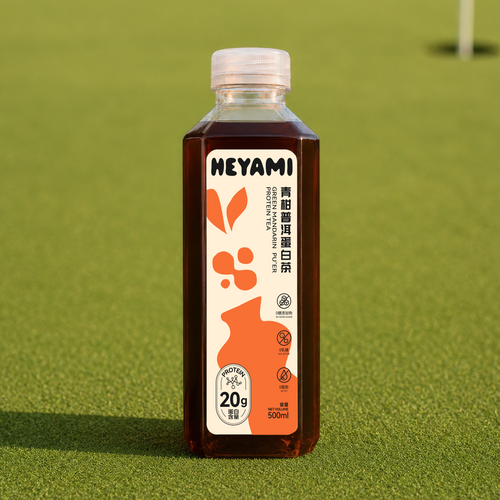
One bottle tops up the 20 g you missed
Green Mandarin Pu'er Protein Tea: 20 g protein, 95 kcal, 0 sugar, no added sweeteners.
View Green Mandarin Pu'er Protein TeaContinue reading
-

What to do about lactose intolerance? Symptoms, a 30-second self-test, what you can drink, and how to get enough protein
Learn how lactose intolerance differs from milk protein allergy, co...
-

Buckwheat tea benefits and cautions: does it contain caffeine? How does it differ from barley tea? All in one article
Separate pure buckwheat tea from green-tea blends and learn what to...
-

Does oolong tea have caffeine? How it differs from green tea and Pu'er, plus oolong tea benefits and when to stop drinking it
Does oolong tea have caffeine? How it differs from green tea and Pu...